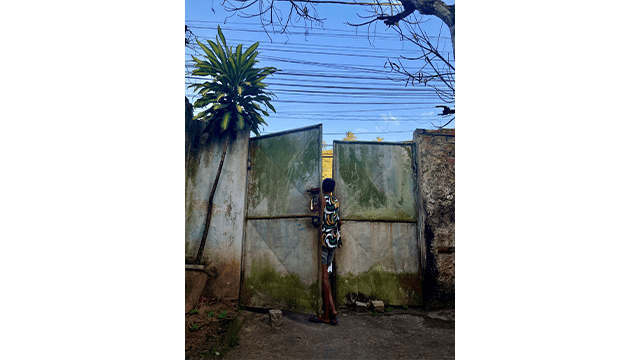
A photo taken during Marie Kolling’s fieldwork in Salvador da Bahia, Brazil, August 2024. Image credit: Peter Krogh Andersen
In Brazil, the COVID-19 pandemic sparked a rise in poverty and accelerated the already ignited ‘fintech revolution,’ pushing a policy agenda of financial inclusion that has been transforming Brazilian society for more than a decade. In the aftermath of the pandemic, indebtedness was at a record high, while credit providers reported record-setting profits. Through ethnography of women juggling debt and ‘dirty names’ as well as bank and fintech actors offering credit, this article explores the frontier of finance targeting people, and women in particular, at the fringes of Brazil’s digital credit economy. At these fringes, credit is both a source of excitement and exhaustion as debt has become part of women’s care work, and dealing with debt has come to resemble ‘modern loansharking’. The article argues that under the ‘fintech revolution,’ the aim of the credit sector is no longer for people to become debt-free, but rather to test the limits of how much debt individuals can take on without defaulting. This has reconfigured indebtedness as a normalised and recurring condition of poverty and a source of profitability for the expansive credit industry.
Marie Kolling is an anthropologist and senior researcher at the Danish Institute for International Studies in Copenhagen and a Visiting Honorary Fellow in the ANU School of Archaeology and Anthropology. She is the principal investigator of a research project on the interplay between digital finance, household debt, and gender inequality in Latin America. She engages in policy work with public authorities and in research dissemination through op-eds, podcasts, and public talks, and is a frequent commentator on Brazilian current affairs for Danish news.
In-person: H.C Coombs Building, Room 1.309 (northern hexagon)
Zoom link: https://anu.zoom.us/j/82431454032?pwd=owA39nWqTYm2TGOcC0sWa9bEDVangD.1
This event was originally published on the School of Archaeology and Anthropology website.
Location
H.C Coombs Building, Room 1.309 (northern hexagon) and Online
Speaker
- Marie Kolling (Danish Institute for International Studies)
Contact
- Kirsty Wissing