You can’t make good policy without evidence, so the two degrees ended up feeling less like a combination and more like a single coherent thing.
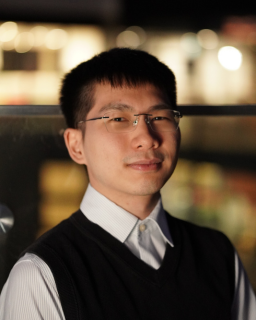
Trung Le came to ANU wanting to understand how decisions are made – why some ideas become policy while others quietly fall away.
Political science was his long-standing interest. Through an ANU Flexible Double Degree, he was able to combine a Bachelor of Political Science with a Bachelor of Applied Data Analytics, bringing together the policy questions that interested him and the analytical tools needed to investigate them.
Now in his final year, Trung sees the two degrees as parts of the same inquiry. Political science helps him examine how institutions, interests and ideas shape decisions, while data analytics gives him another way to assess the evidence behind them.
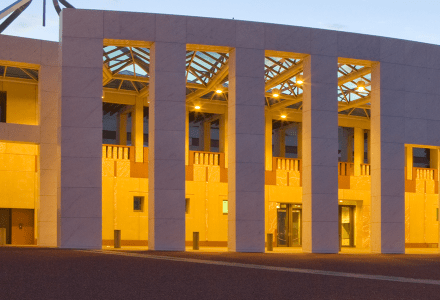
Originally from Vietnam, Trung moved to Canberra in February 2023. He was drawn to ANU by a Bachelor of Political Science that he saw as distinct from programs available elsewhere, as well as the opportunity to study in Australia’s national capital. An ANU Chancellor’s International Scholarship helped make that move possible.
“Being in the national capital puts you close to the institutions that actually shape policy, which matters a lot when that’s the field you want to work in,” he says.
In his final year, Trung is applying both sides of his degree to research and policy writing. He is working with Dr Fengming Lu from the ANU Coral Bell School of Asia Pacific Affairs on a comparative research paper examining military-owned enterprises in China and Vietnam.
He has also completed a policy internship with FORE Australia, where he drafted evidence-based briefs on technology and artificial intelligence regulation for the organisation’s Policy Library.
Trung’s work with Dr Lu grew from ASIA2026: The Politics of China, a course he took in his first year.
“What struck me was seeing someone so early in their career who was already deeply passionate about the material and completely willing to engage with students as intellectual equals,” Trung recalls.
They remained in contact after the course ended, and their conversations eventually developed into the current research paper. The experience also challenged Trung’s assumptions about university teaching.
“I expected distinguished academics to be fairly distant, but that hasn’t been my experience at all,” he says. “The people teaching here are genuinely interested in talking with students.”
Beyond his studies, Trung has explored policy and advocacy in several settings. He completed the Queensland Council of Unions’ Union Summer program, worked as a Research Officer at the Centre for Australian Democracy and served as a General Representative with the ANU International Students’ Department.
For more than a year, he also organised weekly screenings for the ANU Anime and Games Society. Throughout his degree, he has balanced these activities with shifts in hospitality.
As a CASS Student Ambassador, Trung now speaks with prospective students who are considering their own study options.
“It puts me in conversation with people who are at the same stage I was at three years ago,” he says.
Trung expects to complete his degree in November. He hopes to move into policy, research or labour advocacy, ideally in work connected to Southeast Asia or the communities he has encountered during his studies. Further study remains a possibility later on.
His advice to future students is to become involved early rather than waiting until graduation approaches.
“Get involved from the moment you arrive, and say yes to anything that seems even remotely interesting,” he says. “It all counts in ways you won’t see immediately.”